view case


NetXD builds financial technology infrastructure for businesses. With askbuddy, it set out to bring that technology directly to consumers as an AI-powered personal financial assistant. Before investing in a full build, NetXD partnered with Crowdlinker for an 11-week discovery to test the idea: who the product is for, what it should do first, whether people would trust an AI with their money, and how it would reach the market.
Scale-up
Finance
Product Discovery, Go-to-Market Strategy, Branding, Hi-Fi Designs, Prototype

The challenge went beyond product design into market positioning. NetXD needed to translate sophisticated B2B technology into a consumer experience that felt simple without losing the capability underneath. That meant testing several assumptions about consumer financial behavior at once, including the most basic one: that people would trust and adopt an AI-driven assistant for everyday money decisions.
Consumer fintech is crowded, and a new entrant needs a specific reason to exist. askbuddy had a broad potential scope, from a money market fund to savings accounts, CDs, credit cards and loans, and no evidence yet about which need to lead with or which audience to reach first.
Trust was the other open question. Security concerns and skepticism about AI could stop adoption before any feature mattered. NetXD also needed a credible path to revenue and distribution, so the discovery had to answer commercial questions alongside design ones.
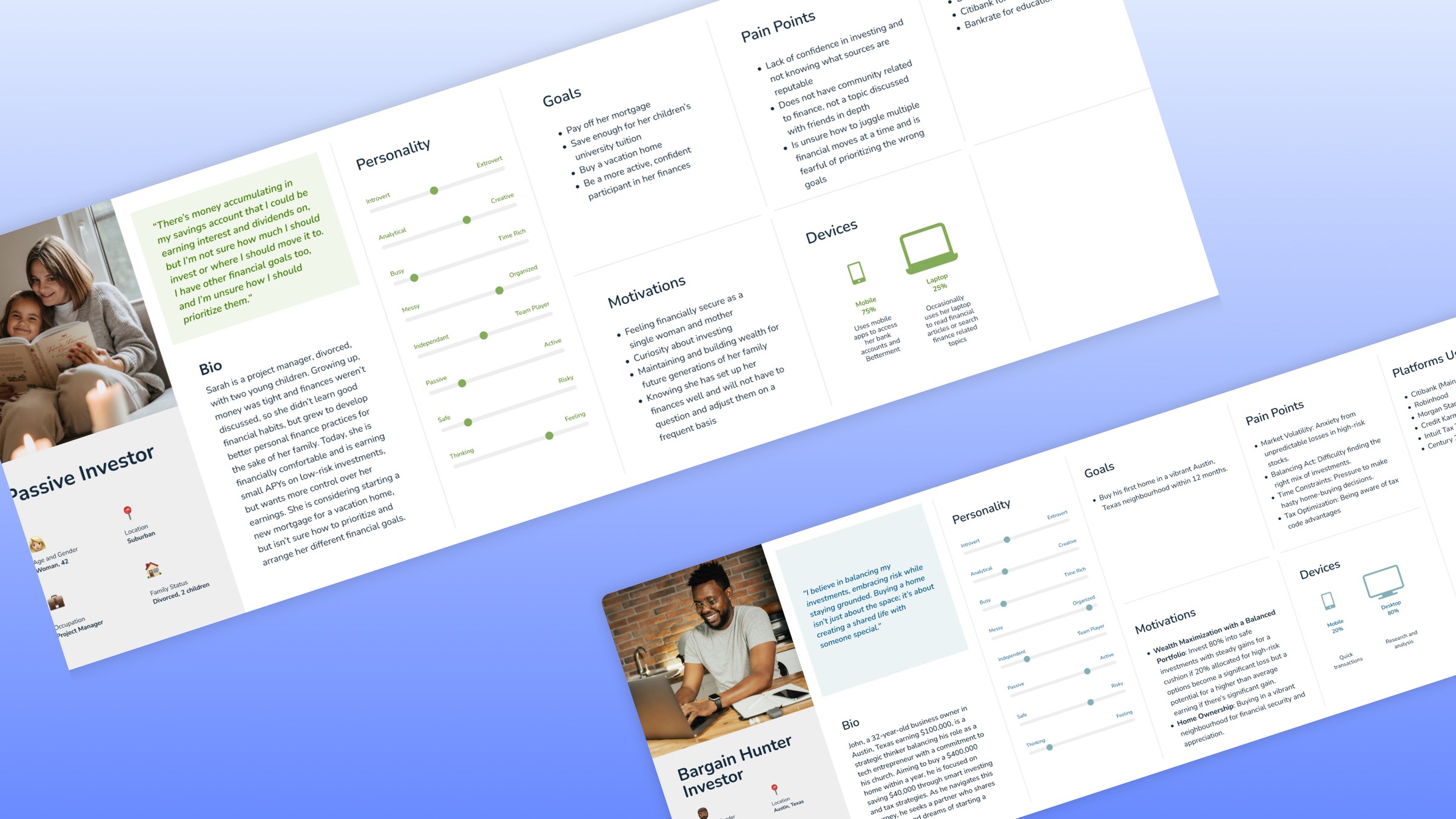
We began with market analysis and competitive positioning to find the gaps in current consumer fintech offerings. That research shaped a product charter that aligned stakeholders on objectives and product pillars. Personas and journey maps, built from primary research and NetXD's own insight, gave every later decision a consistent reference point, and brand positioning workshops set the visual direction.
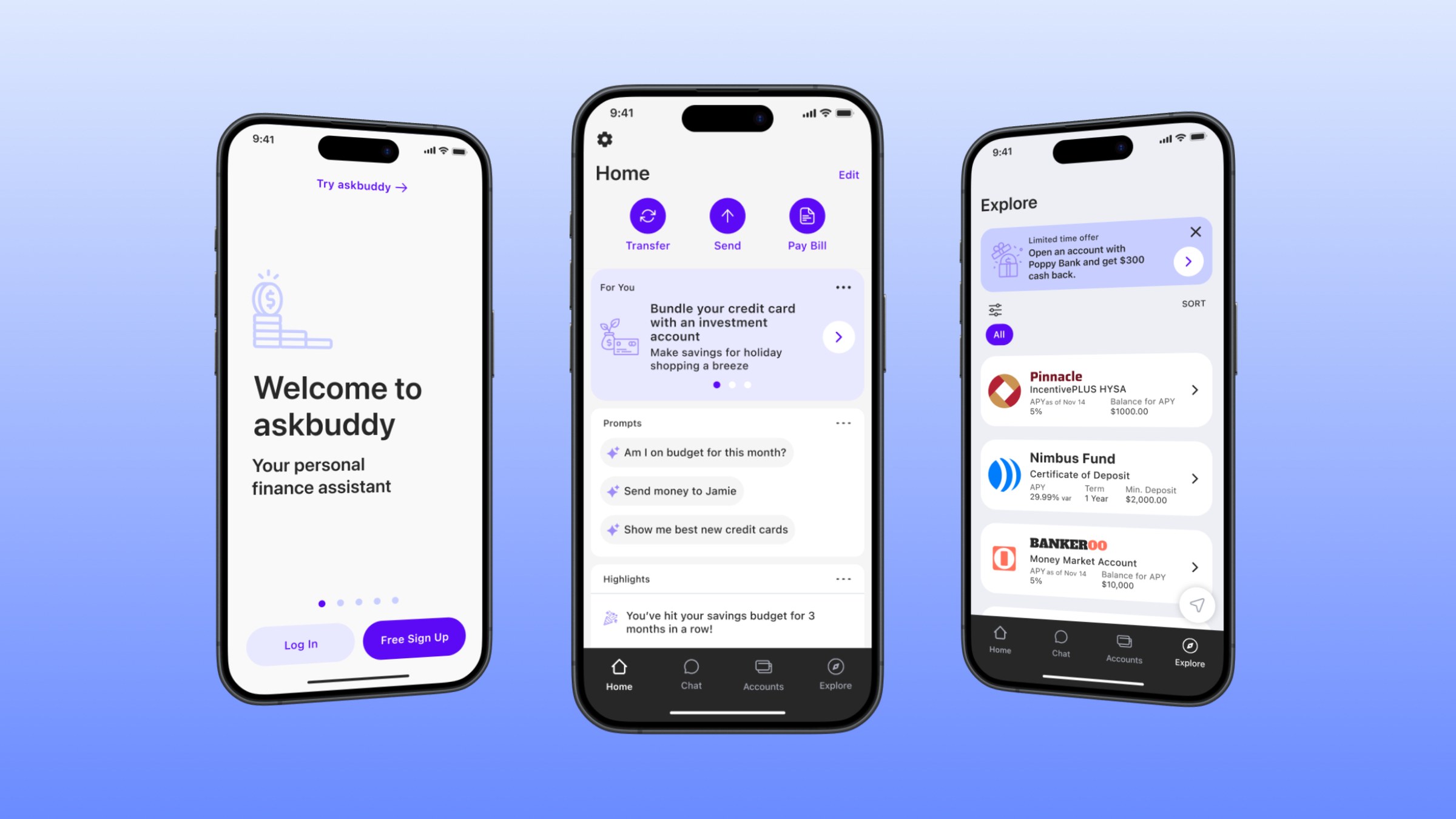
Design moved from information architecture through wireframes to high-fidelity screens in light and dark modes, built around a chat interface as the main way to get things done. Short education moments explain products such as CDs, high-yield savings accounts and credit cards in plain language at the point a user meets them.
We validated on four fronts. Usability testing with 10 participants, four in moderated sessions and six unmoderated through Userbrain, checked the sign-up-free experience, the chat interface and core task flows. A survey of 45 respondents measured feature priorities, trust and willingness to pay. Go-to-market experiments ran paid ads to separate landing pages for banking, credit and insurance, each feeding a waitlist, to learn which audience and which product to lead with. Monetization modeling tested a freemium subscription against the value proposition.
Finally, we developed a partnership framework covering affiliate platforms and institutional relationships, with the integration requirements and economics of each, along with the KPIs to track after launch.
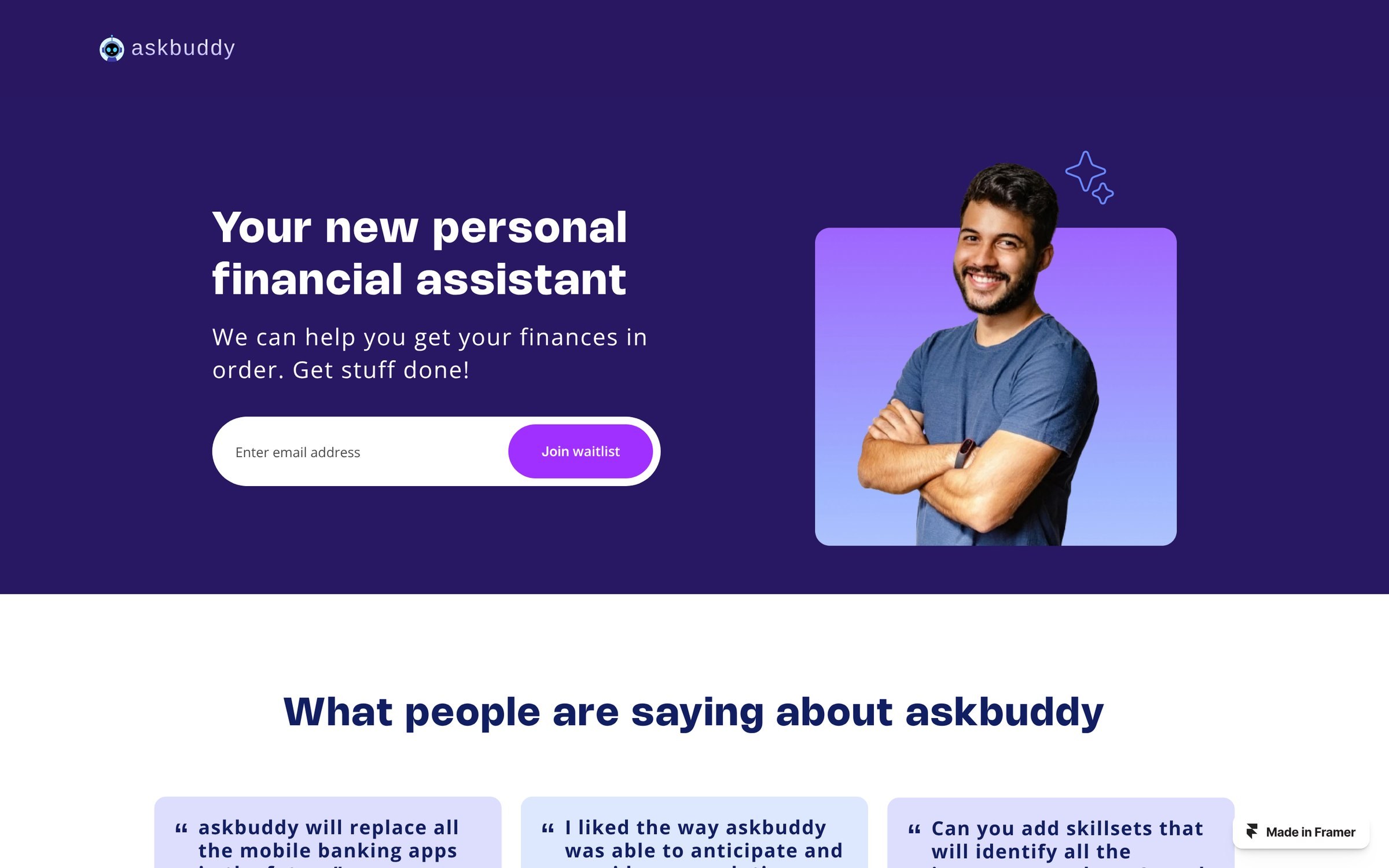
Testers rated the overall experience 4.7 out of 5 and their likelihood to recommend the app 4.5 out of 5. The go-to-market tests generated 1,723 leads from $9,325 in ad spend, a cost per lead of $5.41, and 45 of those leads went on to complete the survey.
Two landing pages stood out. Credit converted at 33% and banking at 19%, which told NetXD which products to lead with and which audiences to reach first. Survey responses confirmed interest in the product and showed that security and trust in AI would need to be addressed directly in product marketing.
"I'm impressed by the chat feature and excited to use it more. I think it would be a really efficient and advanced way to complete other tasks," said one participant in user testing.
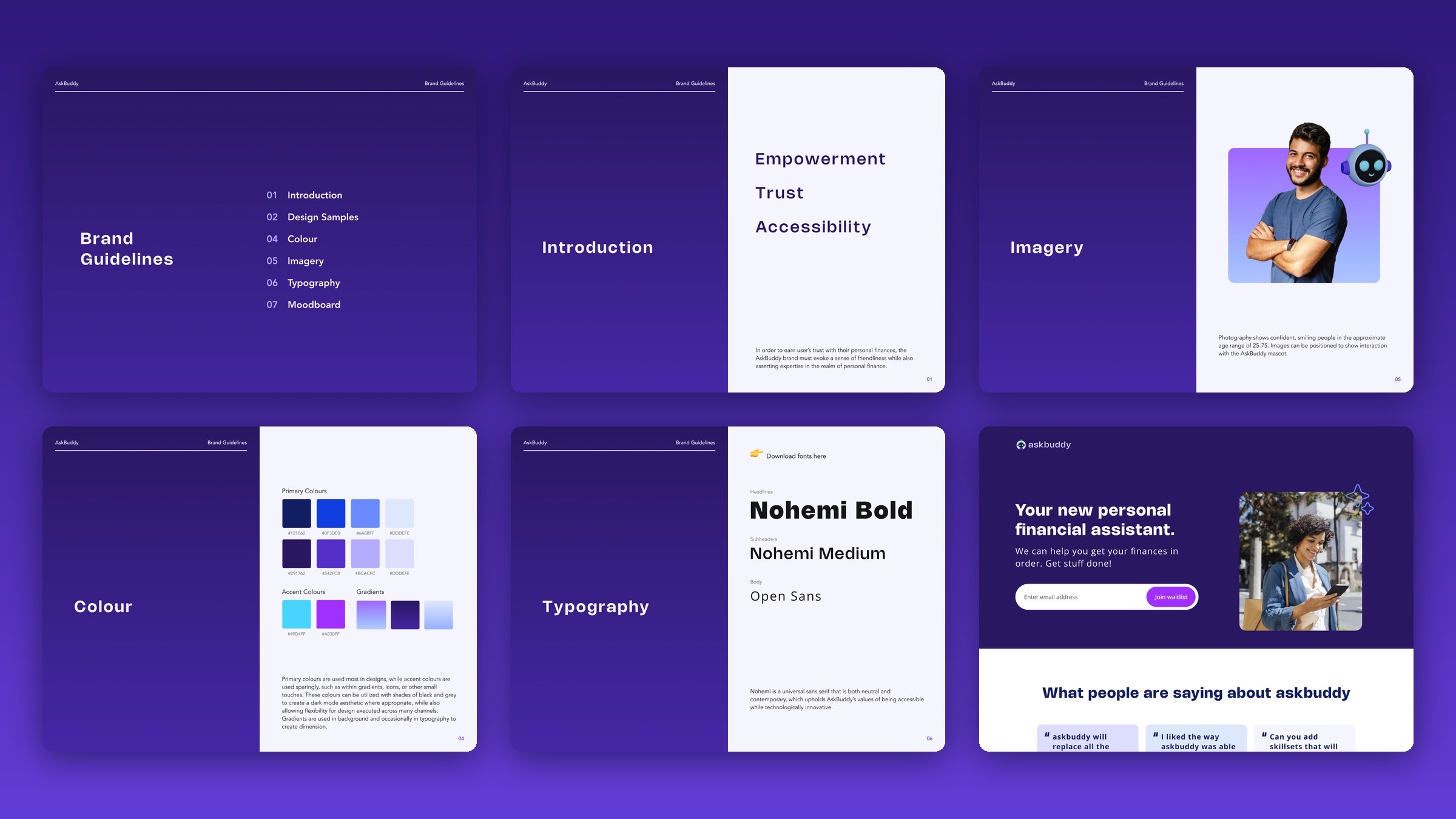
NetXD left the engagement with a product charter, a requirements document, brand guidelines, a UI kit, a high-fidelity prototype and a go-to-market plan grounded in real acquisition data. The prototype works both as a proof of concept for investor conversations and as a blueprint for a development team. NetXD continues to explore and validate the concept.
News & Media