view case


Agnostiq is a Toronto company founded in 2019 to make advanced computing, from quantum hardware to GPUs and high performance clusters, easier for developers and enterprises to use. It is best known for Covalent, an open-source platform for orchestrating compute workloads across clouds. From 2021 through 2024, Crowdlinker designed and built a browser-based IDE that let prospects try Agnostiq's software, extended the agnostiq.ai marketing site, and built and maintained the Covalent website. In February 2025, DataRobot acquired Agnostiq to bring Covalent into its AI platform.
Start-up
Advanced Computing
Browser-based IDE, Admin Portal, Marketing Websites, UX/UI Design

Agnostiq's team is made up largely of physicists, mathematicians and computer scientists. By 2021 they had built serious software: a library of quantum and high performance applications for finance, and the first version of Covalent. What they did not have was a way for a prospect to try any of it without installing packages and arranging access to hardware. They wanted a secure environment in the browser where a quantitative analyst or data scientist could open a terminal, run a sample workflow and see the result. An internal attempt had stalled on security and on getting the environment to run reliably with their libraries. The company was also changing quickly, with new products to launch, and its website had to keep pace.
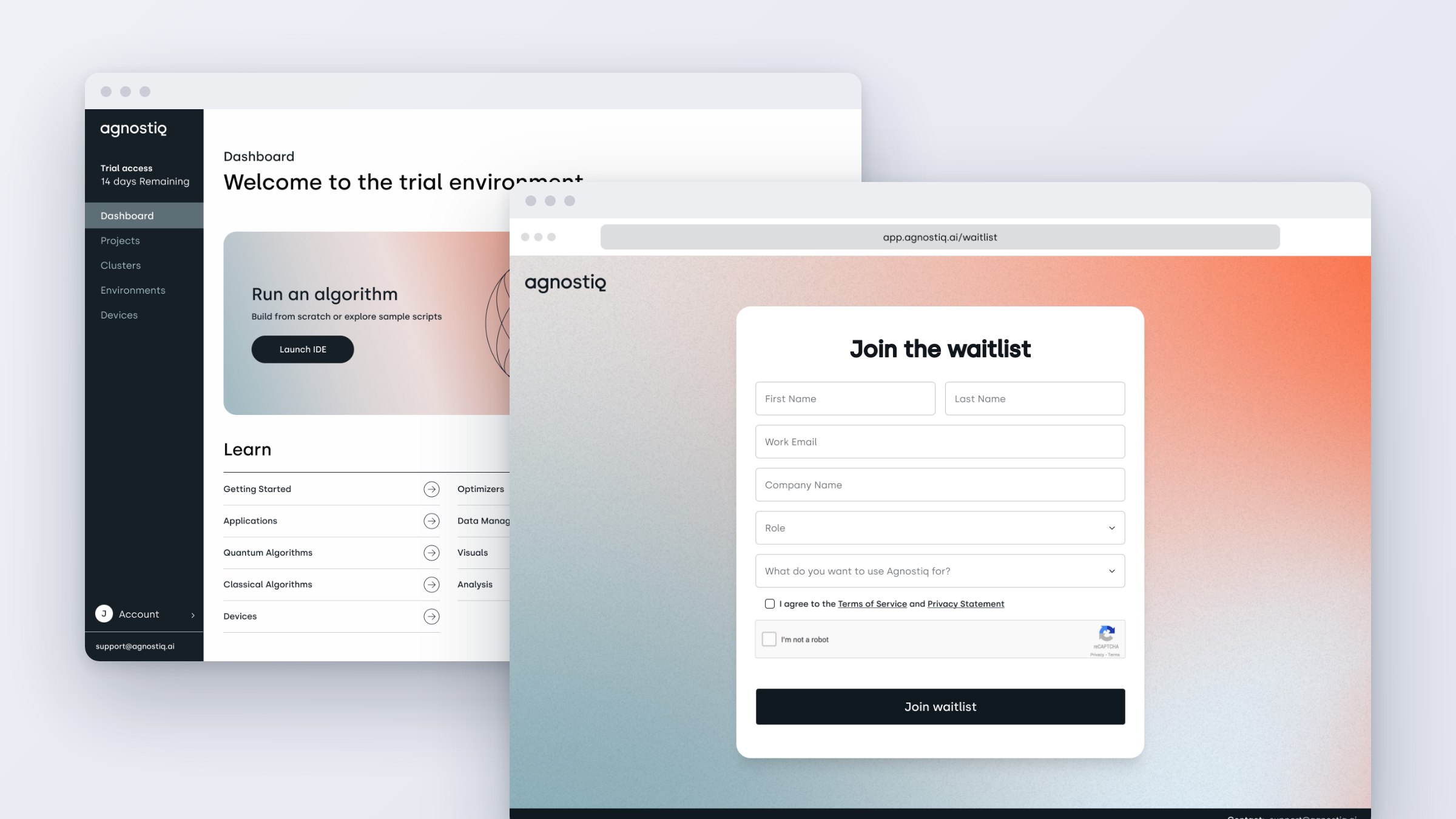
A hosted IDE is as much an infrastructure problem as an interface problem. Every user needs an isolated environment that starts quickly and comes loaded with the right libraries, and that capacity has to grow and shrink with demand. Access had to be controlled too. Agnostiq wanted to approve who got in, group users by organization, cap the number of seats and set how long a trial lasted.
On the marketing side, the existing site was slow to update. Publishing research took too long, the new products had no proper home, and there was no path from reading about a product to trying it. A small team wanted a web presence that matched the ambition of what it was building.
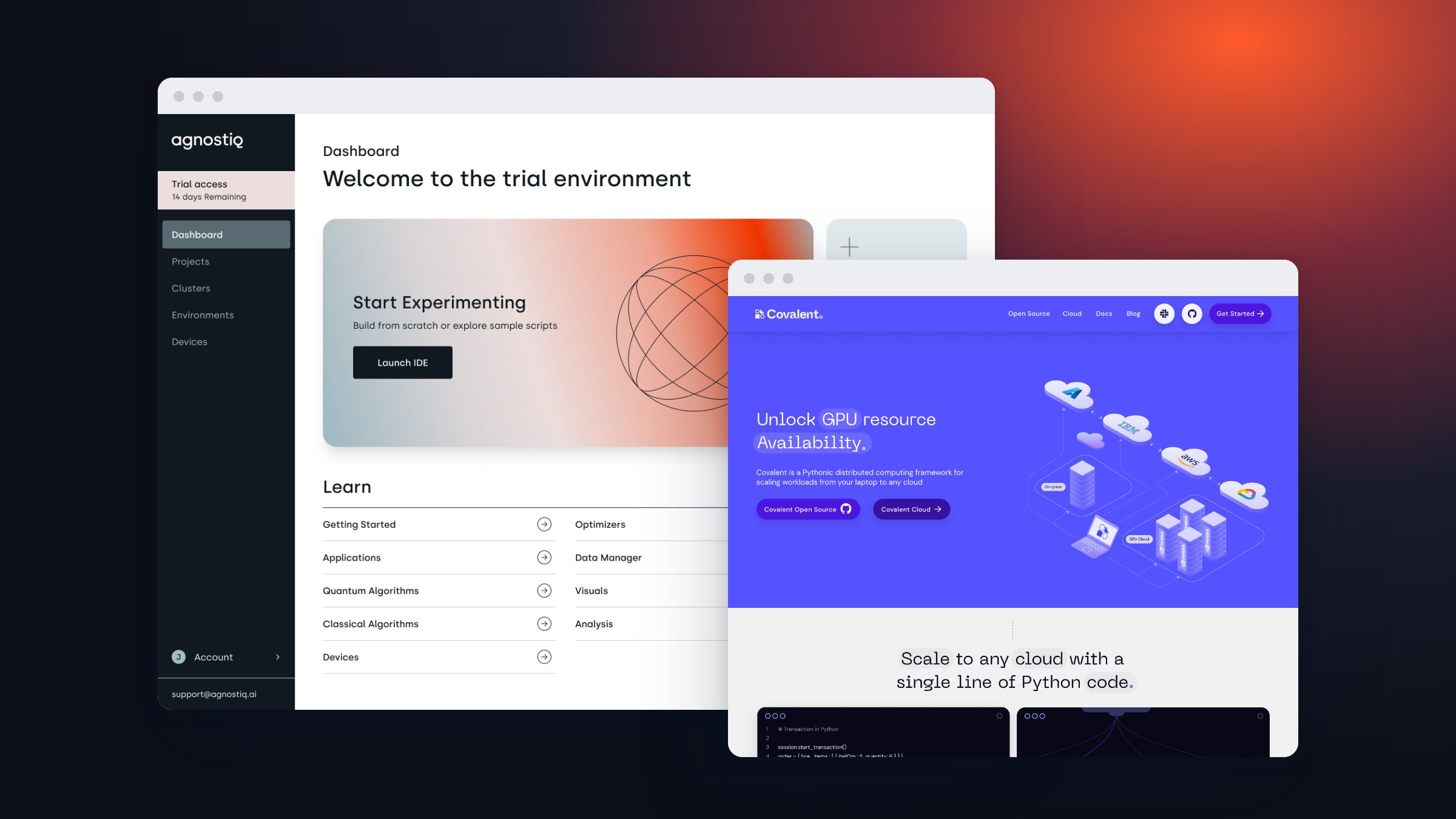
We started with the people who would use the tool. With Agnostiq we mapped two journeys, the demo user and the Agnostiq admin, and reworked them until both teams agreed on the flow. Those became an information architecture, then wireframes for the user app and the admin app, then high-fidelity designs. We built the interface in React with Ant Design, which suited the data-heavy admin screens and was easy for the front-end team to extend.
The product has four parts. A waitlist form collects requests. A magic link, generated for each organization, lets invited colleagues join until the seats run out. An admin portal lets Agnostiq create organizations, add users, extend trials and change seat counts. The user app gives each person a dashboard, documentation for the finance library, and a button that launches their IDE.
Behind that button, each user gets a containerized development environment running on Kubernetes on AWS. Agnostiq's libraries load from container images, so a new release reaches every user. We ran proofs of concept before committing to an approach, added autoscaling so environments load faster, and used Auth0 for sign-in on both apps.
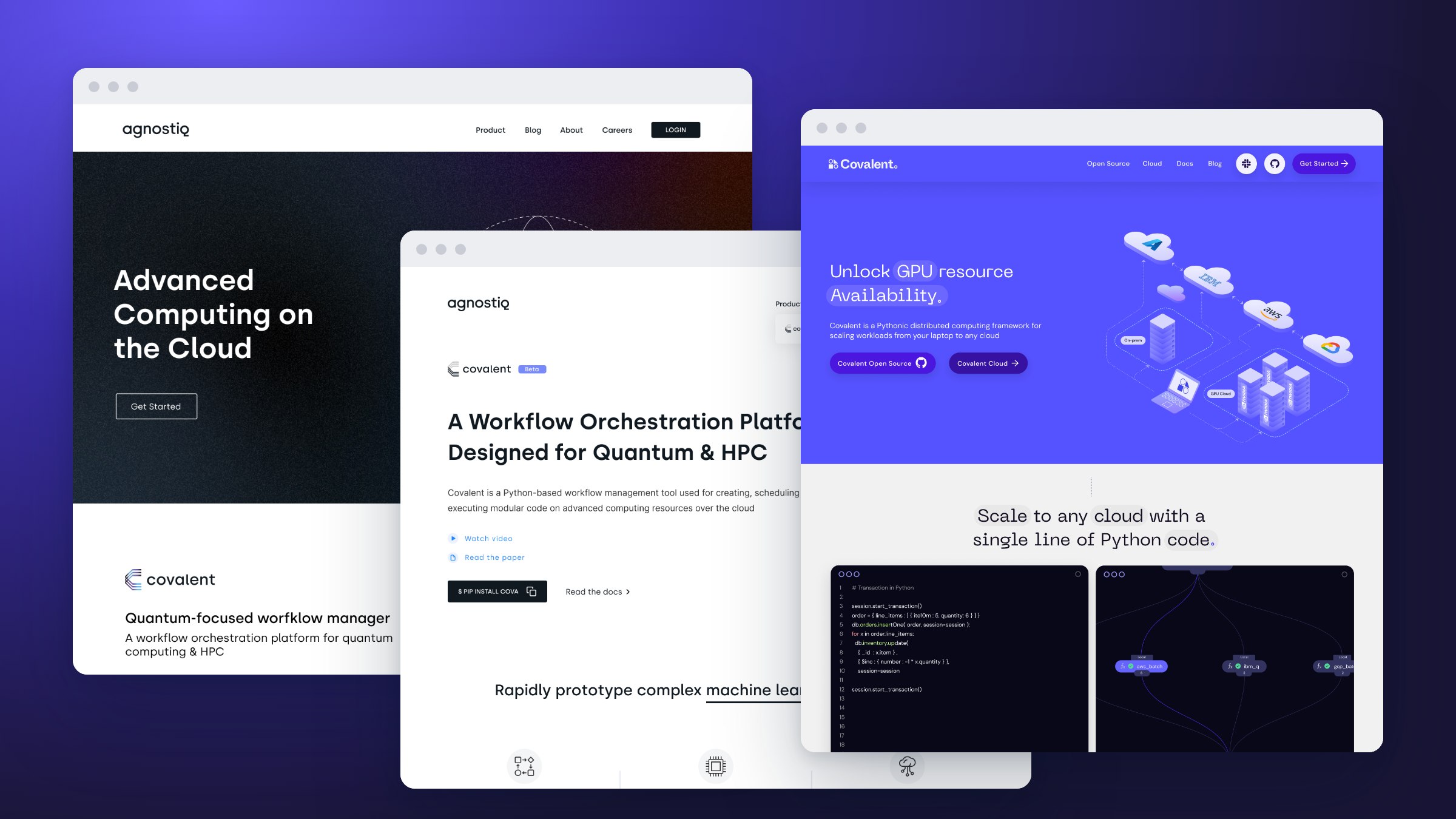
The websites ran alongside. For agnostiq.ai we designed new home, product, blog and about pages and built them in WordPress as a library of about 15 reusable blocks, so the team could assemble and rearrange pages without a developer. When Covalent needed a site of its own in spring 2022, Agnostiq supplied the designs and we built and launched covalent.xyz in about a month, in time for a conference. We kept working on it after that: the Covalent Cloud pages in 2023, then a redesign as the product's focus moved toward AI workloads.
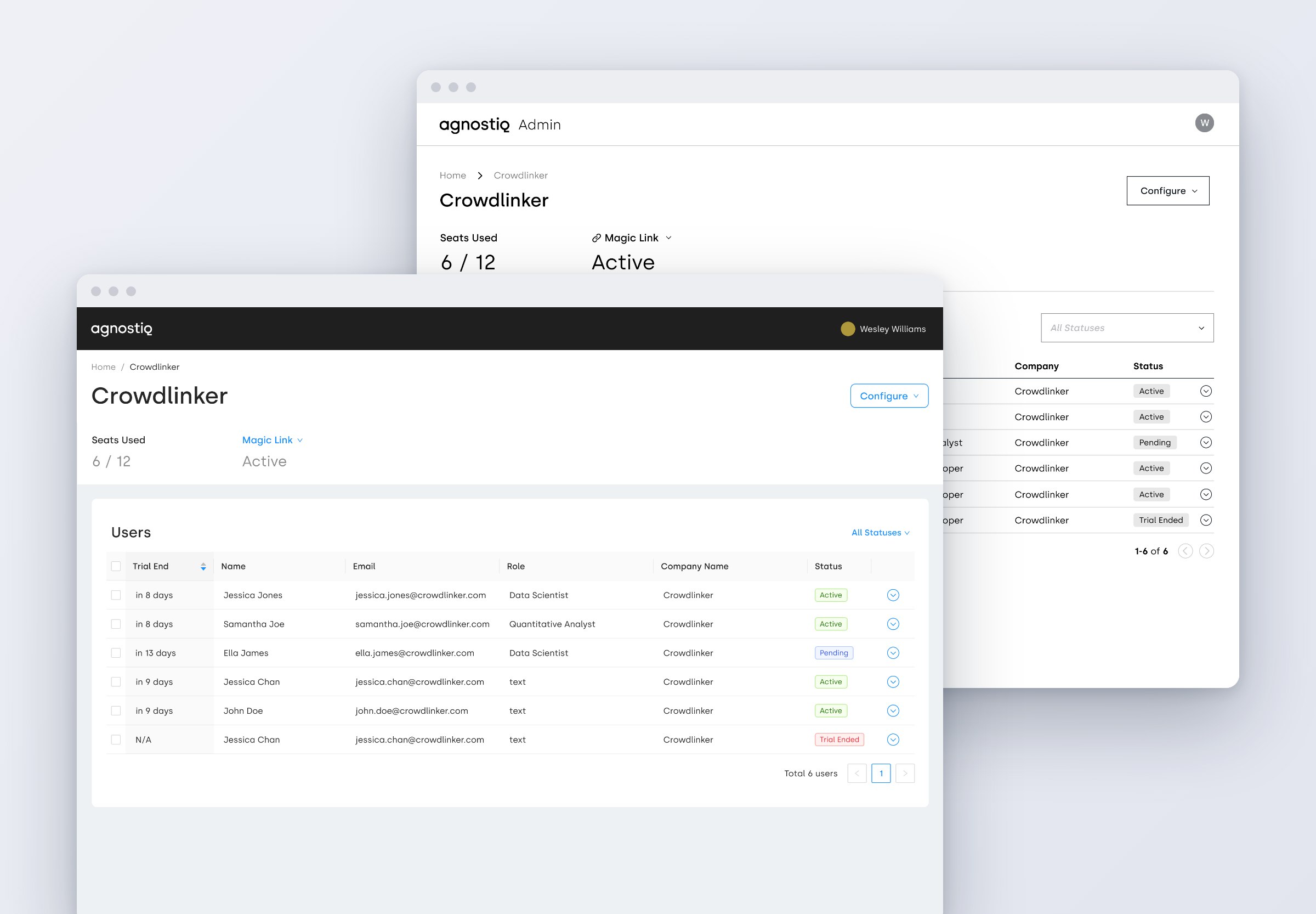
The demo tool was delivered in March 2022 after 25 weeks and came through user acceptance testing with few defects. Agnostiq had a working product to put in front of prospects: sign up, get approved, and run code in a browser with nothing to install.
The websites gave a small team room to move. As Agnostiq's positioning shifted from quantum computing to high performance computing to AI infrastructure, the sites shifted with it, often using blocks the team already had.
On February 10, 2025, DataRobot announced that it had acquired Agnostiq, bringing Covalent, by then downloaded more than 140,000 times, into its platform for building AI applications and agents. The credit for that belongs to Agnostiq's team and the technology they built. Our part was narrower: we were the product and web team that helped a group of scientists show what they had made, first through a demo people could use, then through websites that kept up with a company that kept moving.
News & Media